How To Save Money For A Home: Goalsetting And Making Your Best Home Ownership Decision
Can the “American Dream” of home ownership quickly turn into a nightmare? Your dream might be your biggest nightmare if you save money for a home without making it part of a personalized financial plan. The Personal Finances 101 Blog, Amplify My Wealth Guide To Living The Life You Want and the Amplify My Wealth Goalsetting Calculator can assist you in making a better choice.
Read more: How To Save Money For A HomeDo not let FOMO [the fear of missing out] be the thing that drives you to derail your personal finances.
Instead, it is best to pause and consider your potential long and short-term goals.
Determine what is most important to you. Consider whether you can save money for a home and how much you can set aside for that goal.
Save Money For A Home Downpayment
You are thinking about buying and saving money for a home.
Consider your short and long-term goals when saving for a downpayment and moving to a new home.
These goals are likely to impact one another now or later, so plan for all of them now rather than risk any one or more dreams derailing your finances.
These creative ways to save money for a home downpayment will help you better prepare to purchase your new home.
- Dig into your cash flow and expenses.
- Do it old school with a spreadsheet
- Trim any costs you can now.
- Include any debt payments, including personal and student loans and credit card debt.
In anticipation of your new spending, alongside your current budget,
- Create your anticipated budget
- Research your new homeowner expenses.
- Include one-time expenses
Save Money For Home One-Time Expenses
Some of your one-time home expenses to consider are the downpayment and related closing costs, realtor fees, inspection, repairs, moving expenses, and furnishings, i.e., furniture, window treatments, and accessories for the bathroom and kitchen.
Recurring Home Expenses

Include recurring expenses such as mortgage payments, homeowners insurance, automobile insurance, HOA, umbrella insurance policy, and utilities (water, electric, gas, internet, streaming, phone).
Alongside your current budget, create a “new budget.”
Are You Ready? Now What? Show Me The Money.

You might be ready to go and feel like you have all the money saved or wonder, “what’s next?”
Whether or not you are ” ready, ” start living within your anticipated budget now.
Besides trimming your expenses, this is a great time to prepare for your move and earn extra money for your down payment.
Go through your belongings and see what you no longer need or no longer bring you joy, sell it, and use it towards your downpayment.
Also, consider setting aside any unforeseen increases in cash flow for your downpayment.
Besides making your move and unpacking more manageable by eliminating unnecessary things, a little extra cash can go a long way toward reaching your downpayment goals.
Your Emergency Fund & Other Goals
It is always essential to have an emergency fund.
An emergency fund is a money set aside to supplement or replace your income to cover your expenses in the event of an emergency that may be caused by such things as:
- Death
- Disability
- Job Loss
- Divorce
- Any unanticipated emergency.
Usually, I recommend at least four months of expenses rather than a minimum of three to six months. While long-term disability “kicks in” after three months, there is a one-month lag before you receive any of your benefits.
When determining how much money you need in your emergency fund, consider how much your monthly expenses are or will likely be when you anticipate moving.

Unlike when you are not the owner, you ultimately have more responsibility if things go wrong with your new home, so consider a little more money for those “money pit” like expenses like an appliance or roof repair.
Whether your home is new or older, a thorough inspection will enable you to know better what huge expenses may be in your not-so-distant future.
Always do your due diligence in finding your own inspector; remember, the seller and realtor want you to buy and close on your home so they can make money.
You do not want to be rushed into closing for a home that could derail your finances.
Always consider your risk tolerance and the likelihood of needing to replace income, impacting your finances more profoundly than before owning a home.
Finances are personal.
Consider an emergency fund that is good for you and will help you sleep better at night.
What Is The Best “Home” For Your Savings?
If you are “ready” or not . . .
- Open two high-yield savings accounts.
- Earmarked an account for one-time moving expenses
- Earmark, the other account for the down payment.
- Automate transferring your “extra money” for your move to the appropriate account.
- Automate any additional future expenses to transfer to these accounts until you have met your moving goals.
“Playing House.” Ensure Your Personal Finances Are In Order

The benefit of implementing these creative steps to save for your downpayment for your upcoming home ownership is that they will empower you with confidence.
You can “feel” what it is like to live with your new budget to ensure it works for you before you embark on this journey and, if necessary, make changes to your goals and budget.
For example, if it feels uncomfortable, consider saving for a larger down payment to decrease your monthly expenses or look for a less expensive home.
Or you may realize you are more comfortable than expected and decide to move to your dream neighborhood.
Also, by automating these money moves and transfers to a high-yield savings account, you are more likely to meet these goals sooner rather than later. This will allow you to earn money on your savings while saving more money for a home and leaving it liquid and ready for your move.
Home Ownership Can Be Great But Is Not The Only Way

Consider what is best for your finances and your health. Financial stress is real.
In a recent Discover Thrive Global [with Huffington Post] Insights Report 90% surveyed responded they suffer from financially related stress.
If you are not ready to buy a home now, consider other options. You can wait until you save more money for a home, choose a less expensive option, or look into alternatives.
Most of all, do not let most movies and social media and their unrealistic portrayal of homeownership sway you.
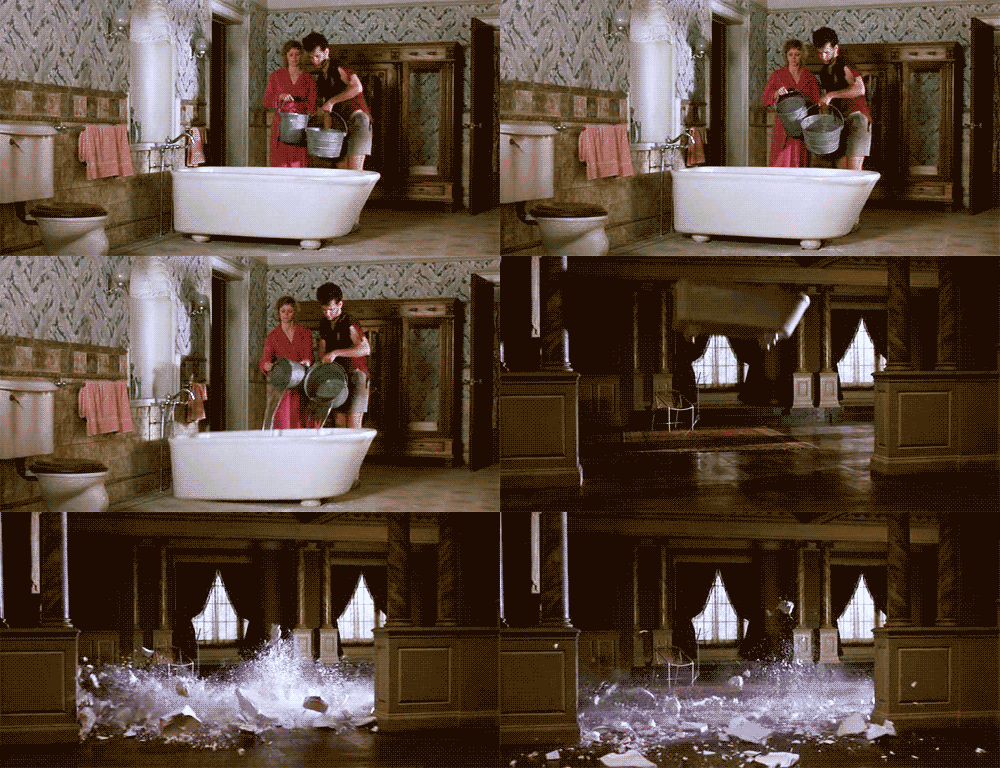
Enjoy watching the comedy Money Pit! This movie shows a less-than-ideal (but fun) view of homeownership; I love it with Tom Hanks and Shelly Long. We can all use a little more laughter.
Please share your ideas about saving money for a home in the comments below.